
CASE STUDY
Trusted GenAI for
Mission-Critical Maintenance
The Challenge
Difficulty finding technical information quickly.
Trust and Security
Traceability and controlled deployment.
Key Takeaways
Why reliable information matters in maintenance.
The AI Approach
Grounded in approved
technical sources.
The Client
A defence organisation needed a faster way for maintenance personnel to access technical knowledge across manuals, engineering instructions, safety documentation, schematics and equipment data.
General-purpose GenAI could generate useful answers, but that is not enough for a defence maintenance environment. They needed answers that were grounded in approved technical data, traceable to the exact source, relevant to the correct equipment, and deployable within controlled infrastructure
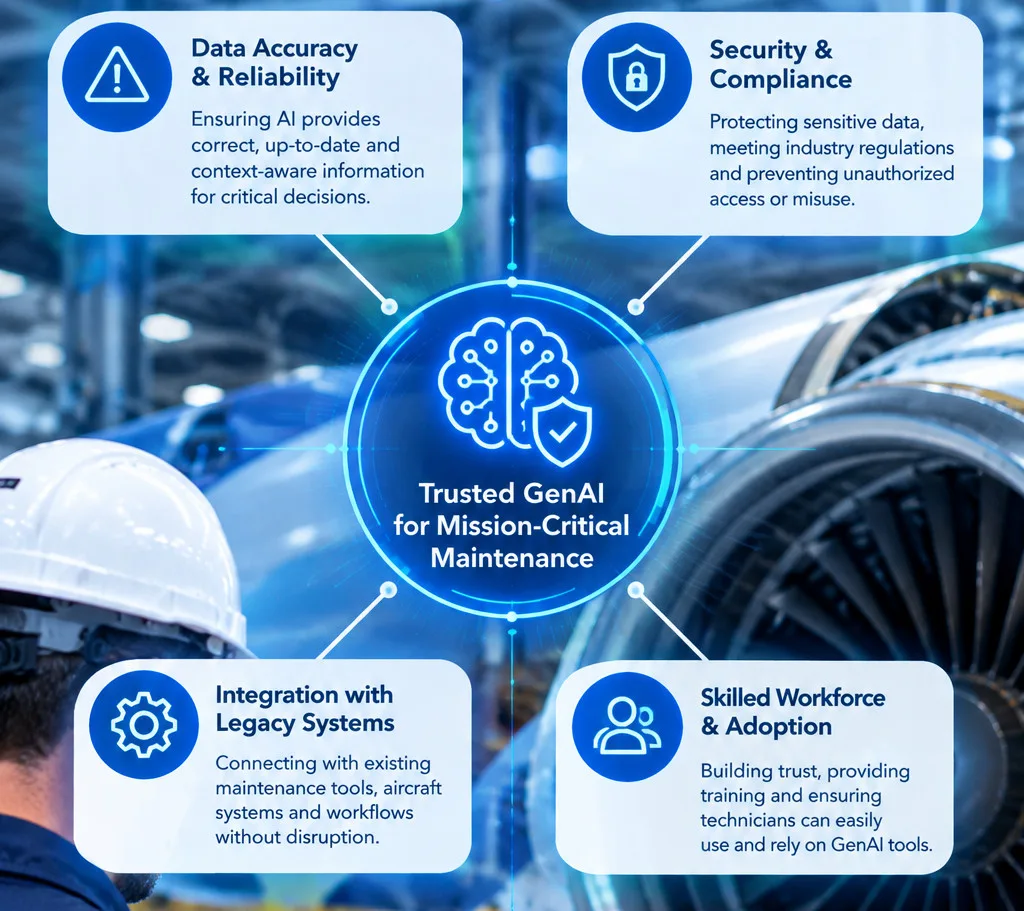
Key challenges
Finding the right answer often meant searching through multiple manuals, interpreting platform-specific terminology and knowing which source should be trusted. General AI tools could not provide the level of assurance required because they were not inherently constrained to the organisation's authorised maintenance knowledge.
The challenge was therefore not simply to add GenAI.
It was to create an AI system that could operate as part of the maintenance environment itself — using the organisation's technical knowledge, terminology, equipment context and security requirements.
The Solution
- LexX deployed a domain-specific GenAI maintenance capability designed around the organisation’s own approved technical data.
- Personnel can ask maintenance and troubleshooting questions in natural language and receive answers grounded in the relevant technical source. Each response can be traced back to the supporting document, page or section so users can verify the information before acting on it.
- The system goes beyond general-purpose GenAI by understanding maintenance-specific terminology, part numbers, equipment context and technical document structures. It can connect answers with relevant component imagery and schematics, helping users move from a question to the supporting technical evidence without manually searching through multiple documents.
- A controlled ingestion process determines what information enters the knowledge base, how it is classified and how it is retrieved.
- Critically, the solution is designed for secure, organisation-controlled and air-gapped deployment environments, allowing sensitive maintenance knowledge to remain within controlled infrastructure rather than depending on a public AI service.

Why This Is Different From General GenAI
Grounded in authorised maintenance data
Verifiable, not just plausible
Data sovereignty by design
Equipment-aware
Built around maintenance workflows
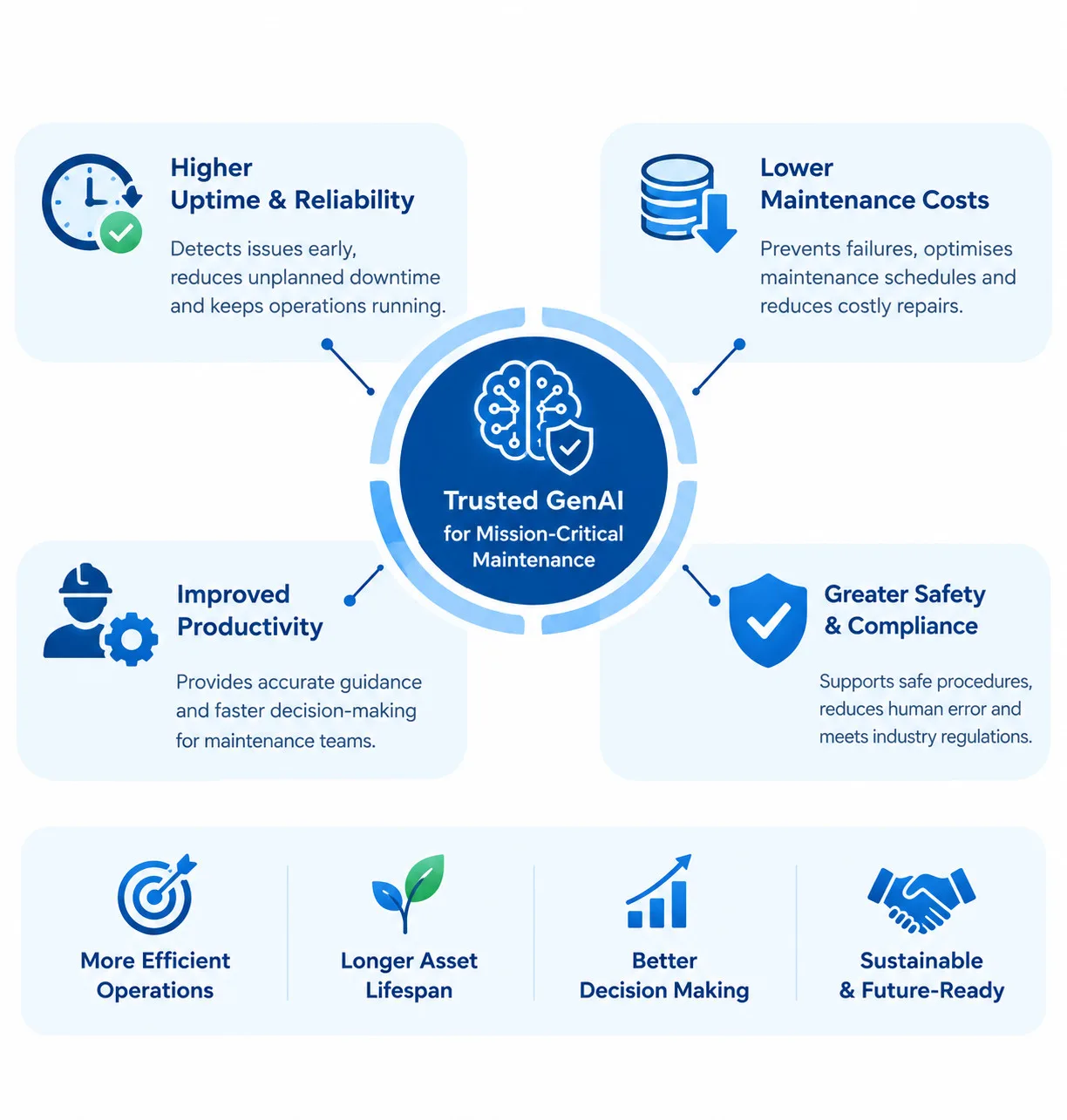
Impact
- 91.6% answer correctness
- 89.2% correct citation performance
- 93% correct source-page identification
- 83% user satisfaction
91.6% answer accuracy on real maintenance queries
GenAI grounded in the organisation’s own technical knowledge — with the source, page and evidence behind every answer.
Data Sovereignty
For defence organisations, where the AI runs can be just as important as what it knows.
The solution is designed to operate within controlled, secure and air-gapped environments, supporting deployment where sensitive technical information must remain inside organisation-controlled infrastructure.
That provides a fundamentally different operating model from public GenAI services: the organisation retains control over the knowledge base, deployment environment, access model and information lifecycle.
Why It Matters
Gor defence organisations, where the AI runs can be just as important as what it knows.
The solution is designed to operate within controlled, secure and air-gapped environments, supporting deployment where sensitive technical information must remain inside organisation-controlled infrastructure.
That provides a fundamentally different operating model from public GenAI services: the organisation retains control over the knowledge base, deployment environment, access model and information lifecycle.